
Justin Tauber
- Strategic Innovation Director, Salesforce Ignite

- Note: this page currently only showcases work I did
as UX Lead and Head of Platforms at Lowe Profero, Sydney
from 2009-2012.



By way of an introduction...
here are the four passions that drive and guide my professional life.
Philosophy
Many years studying the philosophy of perception and cognitive science has given me the analytical and conceptual skills to systematically decompose the most complex problems. I find myself drawing on philosophical traditions and techniques on a daily basis in thinking about the theory and craft of experience architecture.
Teaching
Before I started designing user experiences, I had 10 years of formal and informal teaching behind me. I have taught philosophy and media studies at university level, as well as languages and music. I know of no better way of developing essential consulting skills than through the practice of teaching. As a teacher, you cannot help but be sensitive to your use of language, your responsibilities to your audience, and your role in a knowledge creation process.
Entrepreneurial Design
Design is a very broad term, and the work I do spans interaction design, UX design, service design and design thinking. I like to focus on the outcome of my efforts, rather than their particular form, and I judge myself on the difference I make to the organisations I advise. That's why I have also trained as a Certified Scrum Product Owner, and why I champion agile principles and lean techniques at Profero Sydney.
Digital Architecture
Architects create places where people work, play, celebrate, argue, fall in love, and make memories. The architecture of digital experiences should also be at the service of creating such desirable, meaningful places. Experience architects must understand how things get built, how content is managed, the digital landscape, and plan for the evolution of users and organisations. Without this understanding, it's impossible to build things that are sustainable and retain their value. I want to build things that last.
Selected Work
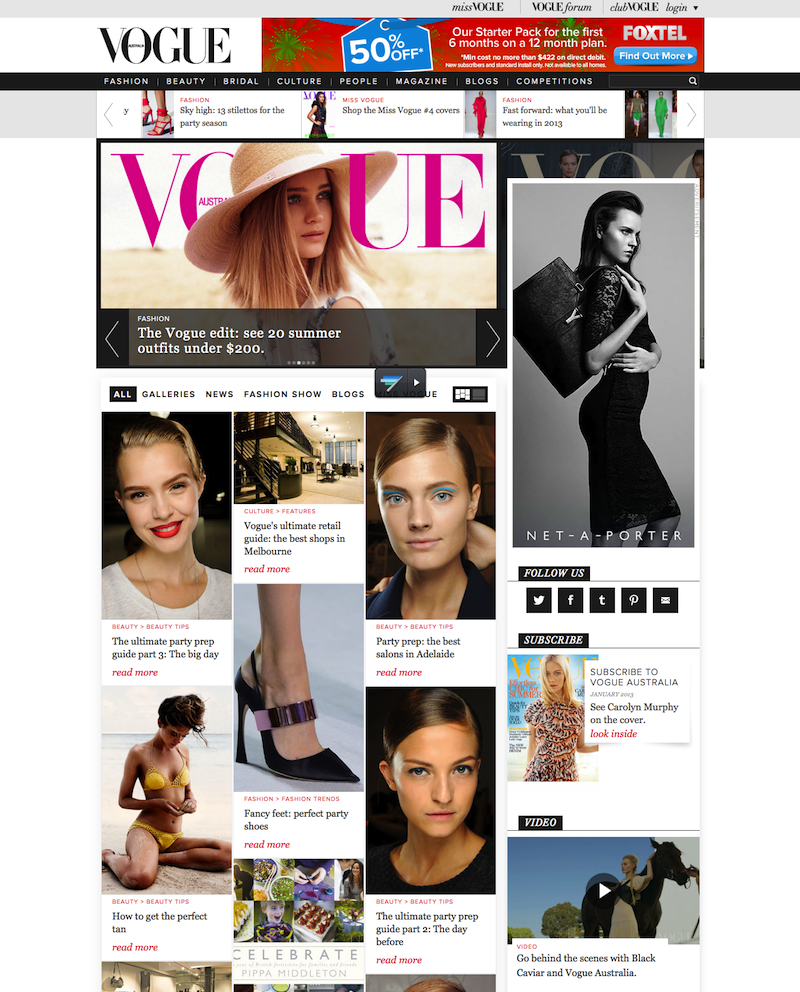
Vogue Australia
Australia's Number One Fashion Site, redesigned and rebuilt in partnership with NewsLifeMedia, a division of News Ltd.
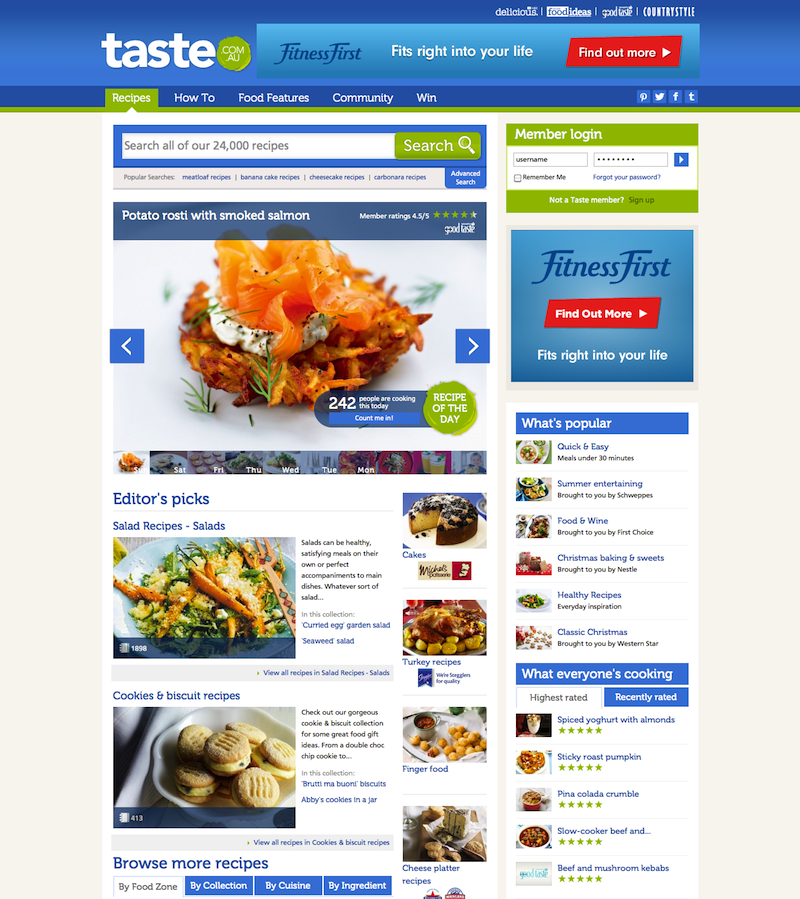
Taste.com.au
Australia's Number One Cooking Site, redesigned and rebuilt in partnership with NewsLifeMedia, a division of News Ltd.
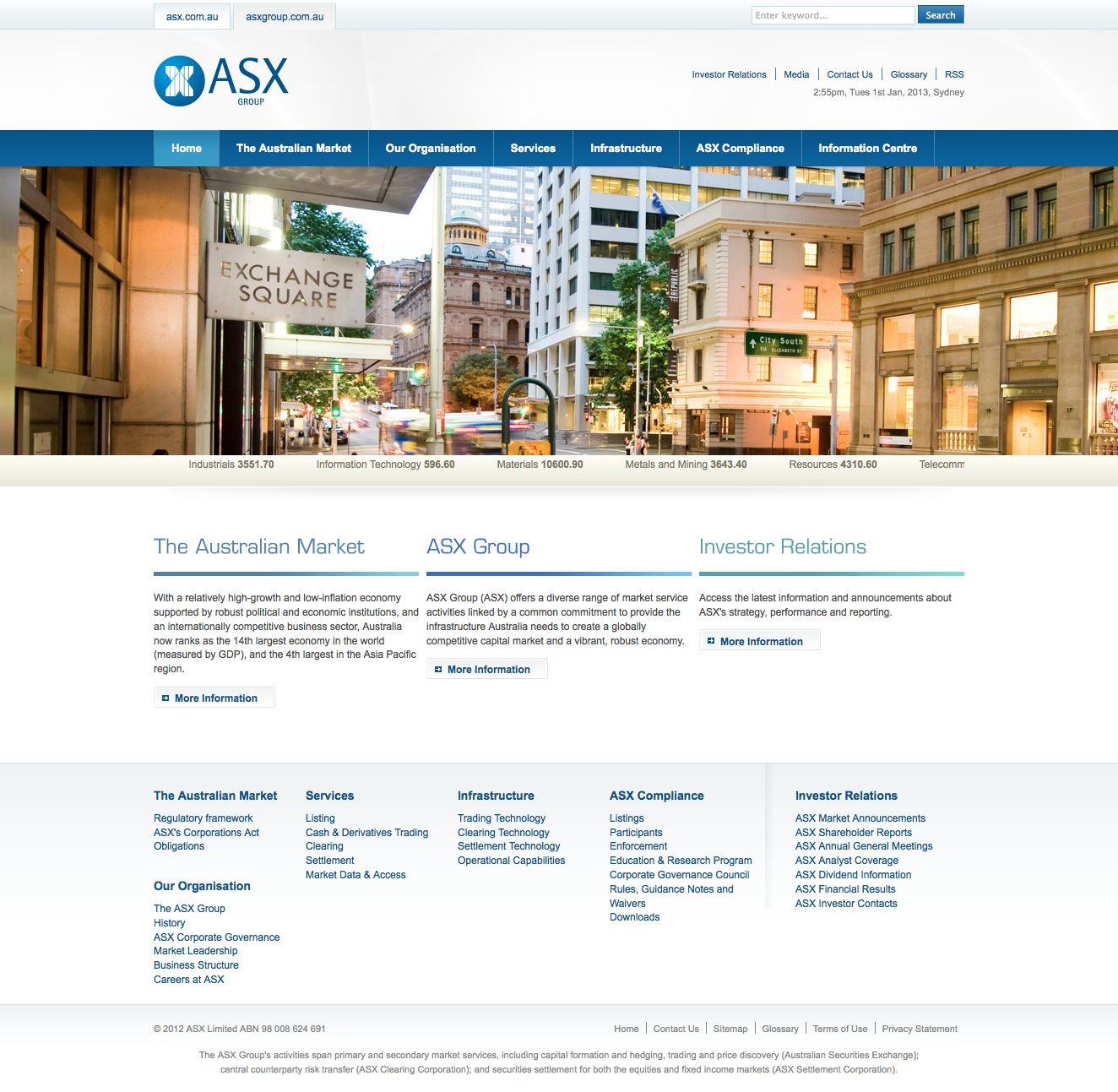
The ASX Group
A Corporate Website, designed and built for Australia's most trusted financial institution.
NRMA Motoring & Services
Desktop and Mobile Sites, designed for Australia's oldest motoring organisation.

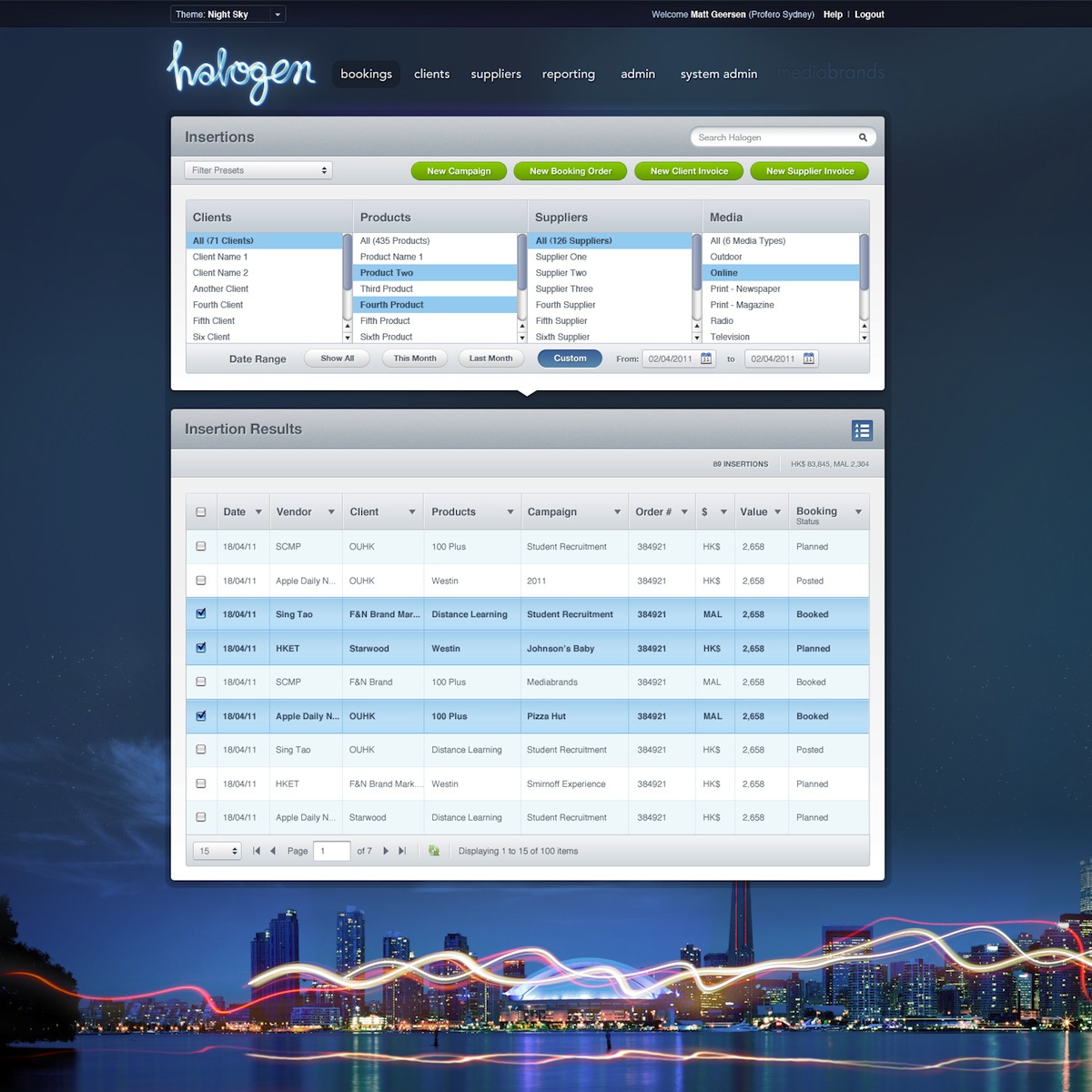
Mediabrands Halogen
Tested, re-architected and redesigned Mediabrands' very own in-house Media Booking, Billing & Payment System. Halogen will eventually be used by over 500 media and finance staff in markets throughout the Asia Pacific region.
Writing & Speaking

Talk: UX Australia, Aug 2012
How modernism influences user experience, and what we might learn from postmodern architecture.

Talk: OzIA, Oct 2010
What SEO brings to Information Architecture
A meditation on demographics, language and IA development. Co-authored with Judd Garratt.

Article: Johnny Holland, Oct 2009
UX: An Art in Search of a Method
My take on what Merleau-Ponty might say about Qualitative User Research.
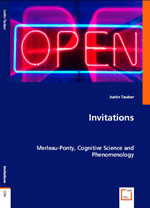
Book: VDM Verlag, June 2008;
Invitations: Merleau-Ponty, Cognitive Science and Phenomenology
A little book about the conditions for perceiving a world of bodies and things, adapted from my Masters thesis.
Get In Touch
Email me at
Meet me at UX Book Club Sydney
Visit me at Profero Sydney, Level 4, 50 Holt St, Sydney